From Indigenous Peoples in Brazil

Revision as of 17:06, 30 January 2018 by Bruno (talk | contribs) (Created page with "{{Título | Habitations}} == Diversity view == {{#miniatura: left |Os Panará, como a grande maioria dos povos da família lingüística jê, vivem em aldeias circulares na...")
(diff) ← Older revision | Latest revision (diff) | Newer revision → (diff)

Habitations

Diversity view
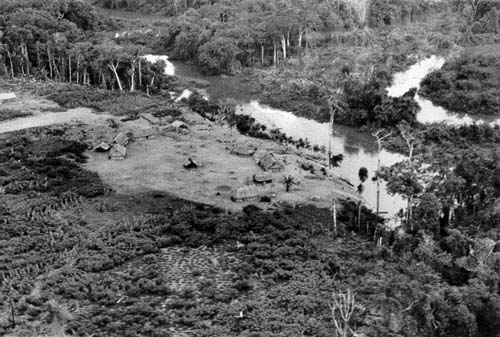
Os Panará, como a grande maioria dos povos da família lingüística jê, vivem em aldeias circulares na divisa dos estados de Mato Grosso e Pará. As residências encontram-se situadas na periferia do círculo. No centro, espaço para atividades políticas e ritu

Panará, like the majority of the peoples of the Jê linguistic family, live in round villages near the State limits of Mato Grosso and Pará. The houses are built on the edge of the circle. At the center, the space for political and ritual activities, is where the House of Men is located. Photo: André Villas-Bôas, 1999.
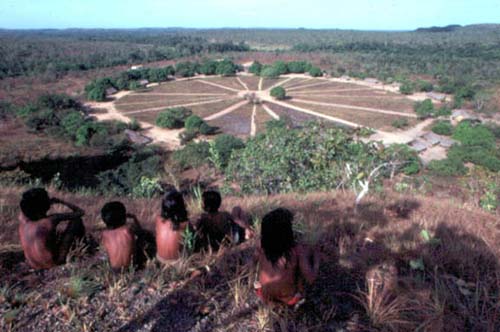
As aldeias dos Krahó (TO), povo da família lingüística jê, seguem o ideal timbira de disposição das casas ao longo de uma larga via circular, cada qual ligada por um caminho radial ao pátio central. Foto: Vincent Carelli, 1983.

The villages of the Krahó (TO), of the State of Tocantins, people of the Jê linguistic family, follow the Timbira ideal of disposing the houses along a wide circular path, with each of them connected by a radial pathway to the central patio. Foto: Vincent Carelli, 1983.
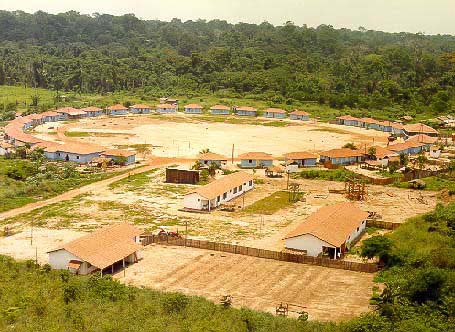
Os Gavião Parkatejê (PA) são falantes do timbira oriental (família jê). Esta é uma de suas aldeias, a Kaikotore. Composta de 33 casas de alvenaria dispostas em círculo, possui cerca de 200 metros de diâmetro. Há um largo caminho ao redor, em frente às cas

The Gavião Parkatejê (PA) of the State of Pará speak Oriental Timbira (Jê linguistic family). This is one of their villages, Kaikotore. It is made of 33 brick houses built around a circle with a diameter of approximately de 200 meters. There is a wide path around the circle, in front of the houses, and several radial pathways linking it to the central patio, where all ceremonial activities are held. Photo: Arquivo ISA, 1984.
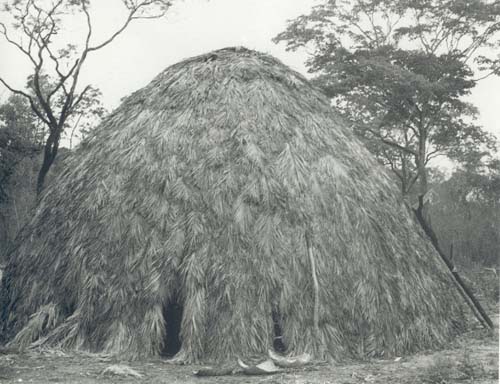
Kayapó, Cateté, 1965 René Fuerst

In a large part of the villages of the present xavante (a Jê people from Eastern Mato Grosso) houses no longer follow the pattern seen in the picture: some combine a brick base and a thatched roof, while others are entirely made of dry grass, but with separated walls and roof. The preference for round houses, set up together in a horseshoe format (a semi-circle of houses opened in the direction of the nearest river), continues among the Xavant.. Photo: Rene Fuerst, 1961.
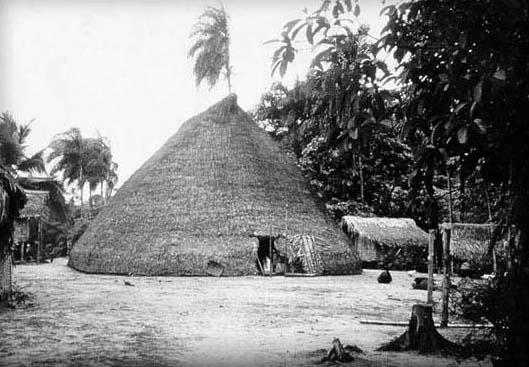
Entre os Marubo, grupo da família lingüística pano que habita o Vale do Javari (AM), a única construção habitada é a casa alongada, coberta de palha e de jarina da cumeeira ao chão, que se localiza no centro da aldeia. As construções que ficam ao redor, e

Among the Marubo, a group that belongs to the Pano linguistic family of the Javari River Valley, in the State of Amazonas, the only inhabited building is the elongated hut, covered with grass and ivorypalm from top to bottom, that is in the center of the village. The buildings around it, raised from the ground with stilts, are used as deposit and are individual properties. Photo: Delvair Montager, 1978.
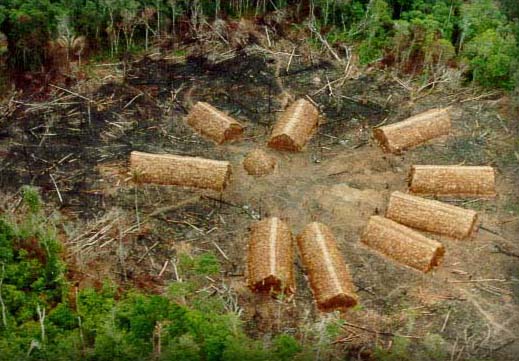
Os Enawenê-Nawê (MT), grupo da família lingüística aruaque, vivem em aldeias formadas por grandes casas retangulares e uma casa circular, localizada mais ou menos no centro, onde ficam guardadas as suas flautas. No pátio central, são realizados diversos r

The Enawenê-Nawê of the State of Mato Grosso, a group that belong to the Aruaque linguistic family, live in villages made of large rectangular houses. A circular house, built more or less in the center, is where their flutes are kept. Rituals and games are held in the central patio. Photo: Ana Lange, 1979.
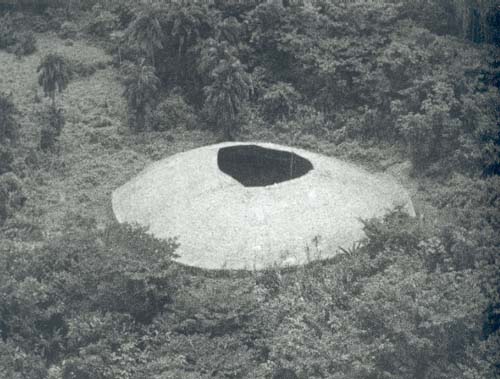
Yanomami, Toototobi, 1961 René Fuerst

The Eastern and Western Yanomami usually live in a single hut inhabited by several families, such as the one of the photo, of the Tootobi group of the State of Amazonas. Considered an autonomous political and economic entity, it is the home of all the members of the village. Photo: René Fuerst, 1961.
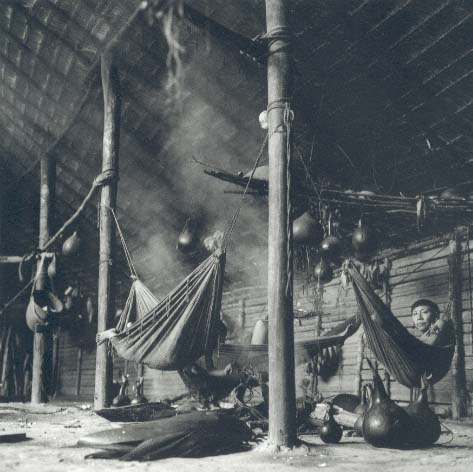
Aqui, uma habitação coletiva yanomami vista de seu interior. Foto: René Fuerst, 1961.

Here, the interior of a collective yanomami house. Photo: René Fuerst, 1961.
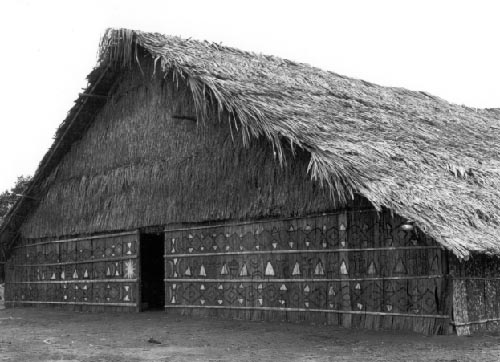
A maloca-museu São João, no rio Tiquié (AM), é um exemplo de como os chamados

The maloca-museum São João (‘maloca’ is the name of an Indian hut), on the Tiquié River, State of Amazonas, is an example of how the so-called ‘forest Indians’, who spoke languages of the Aruaque and Tukano families, of the regions of the Upper Negro River basin, used to live. It is not just a community house, but also an essential space for the performance of rituals. Its internal design makes it possible for those who live in it to revive, in great ceremonies, the trajectory of mythical ancestors. Photo: Beto Ricardo, 1993.
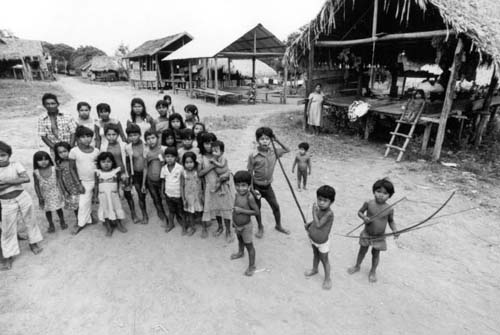
Os Palikur (AP) também são da família aruaque. Suas aldeias são construídas voltadas para o rio. A maior delas, Kumenê, tem suas casas dispostas em duas ruas paralelas. Foto: Vincent Carelli, 1982.

The Palikur of the State of Amapá also belong to the Aruaque linguistic family. Their villages are built facing the river. In the largest of them, Kumenê, the houses are built along two parallel streets. Foto: Vincent Carelli, 1982.