(Redirected from Who they are)
Who are they?
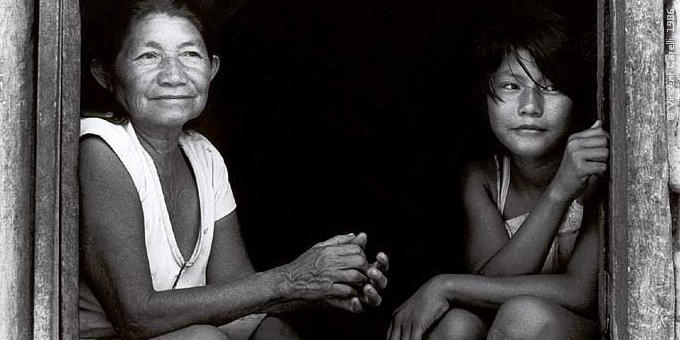
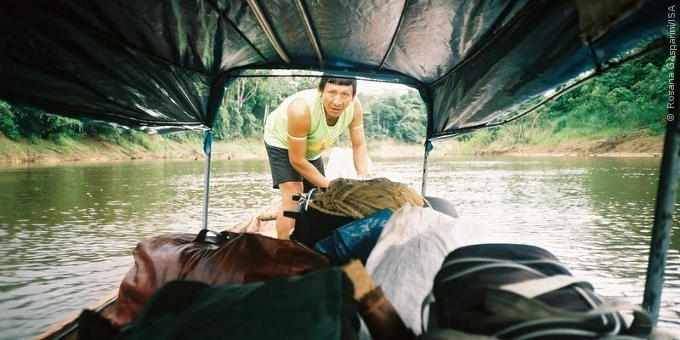
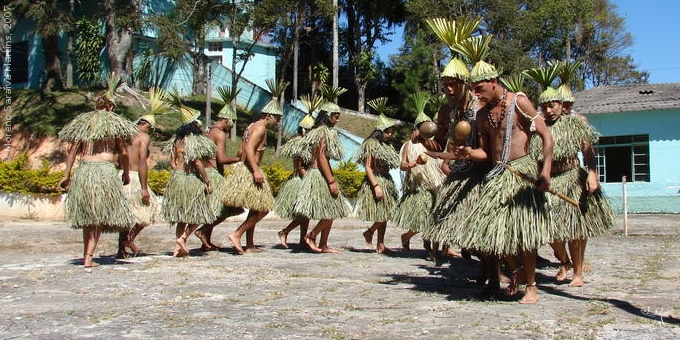
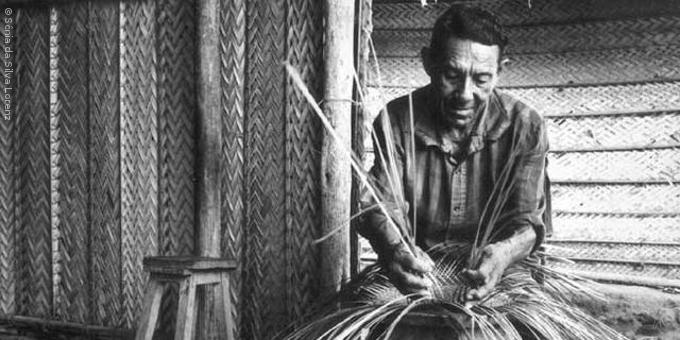
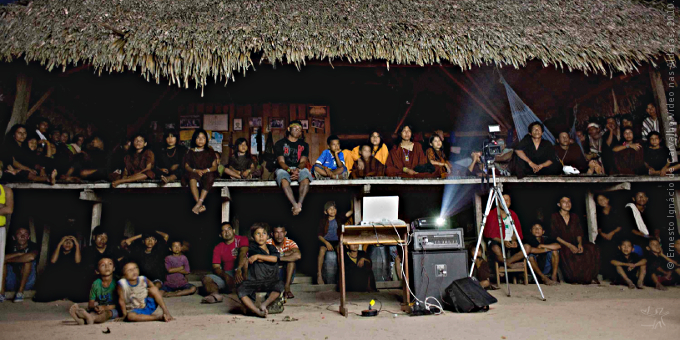
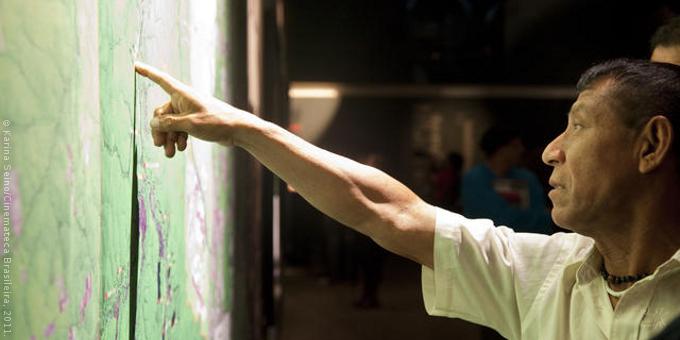
Photos: various authors, see here
Brazil turned 500 in 2000 and still ignores the immense diversity of the Indigenous peoples living in its territory. It is estimated that, at the time the Europeans first arrived, there were more than 1,000 denominations, with a total of between 2 and 4 million people. Today they are 287 peoples , speaking more than 150 different languages and adding up to 896.917 individuals (IBGE, 2010).
The majority of this population is distributed among thousands of villages located within Indigenous Lands (TIs) - spread throughout the national territory.
In order to contribute for the knowledge about and respect for these populations, this site of the Instituto Socioambiental (ISA) presents updated and qualified information on the different Indigenous peoples that live in contemporary Brazil through introductory texts, photographs, news, analyses, maps, illustrations, lists, tables and indications of additional information sources.
This material is the result of more than 25 years of research, started by the Centro Ecumênico de Documentação e Informação (CEDI), continued by our staff’s daily work and supported by a vast network of ISA’s collaborators.
Today, talking about Indigenous peoples in Brazil means to recognize basically that:
- In the lands colonized by the Portuguese, where later a country called Brazil would exist, there were already human populations;
- It is not known exactly where they came from; we say that they are ‘original’ or ‘native’ because they were here before the European occupation;
- Certain groups of people who live in present-day Brazil are historically connected to these early peoples;
- The Indians who live in Brazil today have a long history, which started to differentiate itself from the so-called Western Civilization still during Pre-History (with the migratory waves from the ‘Old World’ to the Americas that took place thousands of years ago); ‘their’ history has come closer to ‘ours’ only in the past 500 years (with the arrival of the Portuguese);
- Like any other human group, Indigenous peoples have cultures that result from the history of the relationships among themselves and between them and the environment; a history that, in their case, has been (and continues to be) dramatically altered by the reality of colonization;
- The territorial division of South America into countries (Brazil, Venezuela, Bolivia, Argentina...) does not necessarily coincide with the occupation of the geographic space by the Indigenous population; often there are cases of peoples who live on two sides of international borders, which were created long after they were established in the region; that is why it makes more sense to speak of Indigenous peoples ‘in Brazil’ than ‘of Brazil’.
Indians, Amerindians
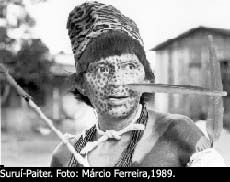
Generically, the Indigenous peoples that live not only in Brazil but also in the entire American continent are called Indians. This name is the result of a historical mistake made by the first Europeans who arrived in America, who thought they had reached India. The continuous use of the word, even by the Indians themselves, has made it a synonym of an Indigenous person in Brazil.
Because of the similitude among Indians from North, Central and South America, there are those who prefer to call all of them Amerindians. Indians or Amerindians are thus the indigenous peoples of the Americas. But what is it that makes of an Indian an Indian?
Criteria of identification
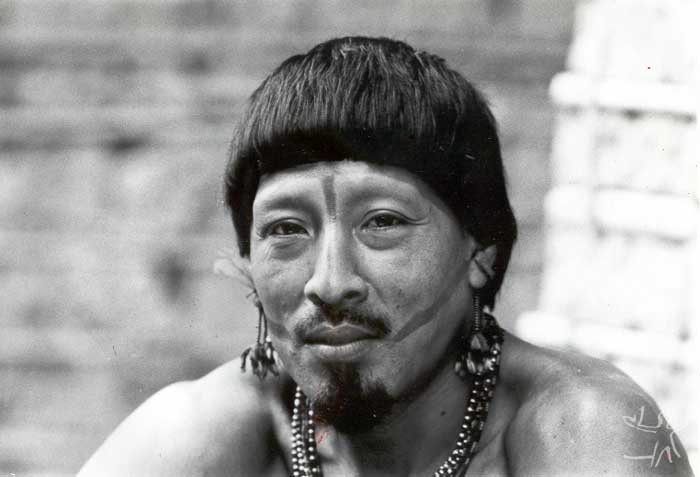
In the perspective of those who already lived in a given area, the historical process of colonization and constitution of new nations was extremely violent: extinction of entire peoples, demographic decimation, land seizures, destruction of traditional means of physical and cultural survival, disappearance of particular ethnic identities within the new national societies in formation...
After such a long time, so much oppression and, in many cases, miscegenation, there is a problem regarding Indigenous peoples: how is it possible to identify clearly persons and groups of persons who are native to these places and those who are not?
The answer to this fundamental question is not simple. It has to do with recognition of special rights, the struggle for compensations for historical injustices, and conflicts of interests regarding the possession of certain areas or to the exploration of natural resources. It belongs, in short, to the realm of politics: of each individual country and also of international organisms such as the United Nations, the International Labor Organization or the Organization of American States.
Documents from different times, countries and institutions show different criteria for identifying who is Indigenous, based in concepts such as race, cultural traits or economic development. In Brazil, the most accepted criterion nowadays is that of ethnic self-identification. In other words: it is considered Indigenous the members of a group of people who identify themselves as a collectivity distinct from the national society as a whole due to their historical links to pre-Columbian populations (i.e., populations that existed before Columbus first arrived in America, in 1492). Every individual who recognize herself/himself as part of a group with those characteristics and is recognized by the group as such may be considered an Indigenous person.
Who is Indian?
by Eduardo Viveiros de Castro, researcher, professor of anthropology of the Museu Nacional (UFRJ) and founding partner of ISA.
- An Indian is any member of an indigenous community, recognized by the latter as such.
- An indigenous community is any community founded on kinship or coresidence relations between its members, who maintain historical-cultural ties with pre-Colombian indigenous social organizations.
The kinship or coresidence relations constituting the community include relations of affinity, adoptive affiliation, and ritual or religious kinship and are more generally defined in terms of the conception of fundamental interpersonal bonds held by the community in question.
The historical-cultural ties with pre-Colombian indigenous social organizations include historical, cultural and sociopolitical dimensions, namely:
- The continuity of the community’s present territorial localization in relation to the situation during the pre-Colombian period. This continuity includes, in particular, the derivation of the present situation from the decisions or contingencies imposed by colonial or national powers in the past, such as forced migrations, slave raids, reductions, mission villages and other measures taken to assimilate and occlude ethnic groups;
- The positive and active orientation of the group in relation to community discourses and practices derived from the Amerindian cultural background and conceived to be an important heritage of the group. Given the processes of cultural destruction, reduction and occlusion associated with the situation evoked in the previous item, these discourses and practices are not necessarily those specific to the cultural area (in the historico-ethnological sense) where the community is located today;
- The community’s decision, whether manifested or simply presumed, to constitute itself as a socially differentiated entity within the national union, with autonomy to determine and deliberate on its composition (modes of recruitment and criteria of inclusion of its members) and internal affairs (community governance, forms of territorial occupation, system of trade and exchange with the surrounding society), as well as defining its own modalities of symbolic and material reproduction.
[May, 2005]
About the names of the peoples
Because they did not write at the time of their ‘attraction and pacification’, the Indians who lived in Brazil were (and continue to be) ‘baptized’ in writing by ‘whites’, in a process that has given (and still gives) margin to a lot of confusion in terms of:
Spelling
There is great variety in the manner in which the names of Indigenous peoples are spelled in Brazil. Different patterns co-exist side by side, sometimes created by the staff of the Federal Government’s organ for Indian affairs, Fundação Nacional do Índio – National Foundation for the Indian – (Funai), sometimes by anthropologists and, more recently, even by Writing Manuals of the main titles of the Brazilian press. The name of a group that today lives in the State of Acre, Kaxinawá. for example, may be written in at least four different ways: caxinauá, cashinaua, kaxinawá and kaxináua.
The main reason for anthropologists to choose a spelling for name in a given way has to do with the adoption of an alphabet in which the words of the language of that people will be written. Because Indigenous languages frequently have sounds that have no direct representation in the letters of the Brazilian Portuguese alphabet, anthropologists are forced to resort to other letters and combinations of letters. They try, in such case, to use letters whose sound interpretation are close to the international phonetic alphabet, used by linguists all over the world, instead of the Portuguese alphabet.
Besides, why should Indigenous names be reduced to the Brazilian form when there are several peoples that do not live exclusively in Brazil? Let’s not forget that the borders between the national States in South America were superimposed on Indigenous societies in such a way that some of them live under the political and administrative jurisdiction of two, three and even four different countries.
The disagreements on the orthography of the names of Indigenous peoples often place anthropologists against the Writing Manuals of large newspapers. But in this topic there is no consensus even among anthropologists themselves. Most controversies are related to the use of capital letters and plurals. But in that regard there is no consensus even among anthropologists themselves. Most controversies are related to the use (or not) of capital letters and the plural form for the names of the ethnic groups (both of which are possible in Portuguese).
For some people, when the name of a people is used as an adjective, there is no reason for using capital letters (Guarani language, for example, can be written as guarani language, which, unlike English, can be used in Portuguese). When it is used as a noun, it would be more adequate to use capital letters, since it designates a single collectivity, a society, a people, instead of just a group of individuals. Thus Kaingang is correctly written in Portuguese when it is a noun.
Those who defend that the plural form is unnecessary (which is generally required in Portuguese) justify their opinion by saying that adding an ‘s’ to a word of an Indigenous language results in a hybrid.. In addition, there is the possibility that the words may already be plural or, perhaps, that the plural form does not exist in the Indigenous language.
Writing Manuals, in turn, impose the use of the Portuguese orthography for the names of the tribes, not allowing the use of the ‘w’, ‘y’ and ‘k’ (!) and of groups of letters that do not exist in Portuguese, such as ‘sh’. This criterion is inconsistent, just as writing names always in small letters or use singular and plural but not masculine/feminine is. Thus if krahô has to be written craô, then Kubitscheck should be written Cubicheque, and Geisel, Gáisel.
Meanings
The confusion becomes worse when self-denominations – i.e., the verbal forms with which a people names itself – enter the scene. In many cases, research made by anthropologists and linguists find out that self-denominations have nothing to do with the names given to Indigenous groups by ‘whites’. A good part of the current names used today – and in the past too – to designate Indigenous peoples in Brazil are not self-denominations. Many of them were given by other peoples, frequently enemies, and for that reason have inadequate connotations.
Such is the case, for example, of the Araweté, named as such for the first time by a sertanista (expert on Indians) of Funai who, just after the ‘first contacts’, established in the mid-1970’s, believed he could understand their language. Thus the name, written for the first time by a federal employee in a report, ended up becoming the official public identity of this people. But an anthropologist who studied the Araweté a few years later and learned their language found out that the members of this people originally do not call themselves by a noun; instead, when referring to the collective to which they belong they use the word bïdé, a pronoun that means ‘we, the human beings’.
The word bïdé does not refer to a substance (like ‘Brazilian’, for example, refers to ‘Brazil’), but to a perspective (human, as opposed to animal, divine, enemy...). Depending on the context in which it is said, it might refer to human collectivities more or less extensive: to the Araweté themselves (as opposed to other groups, enemies); to all the Indians (as opposed to non-Indians); to all human beings (as opposed to animals and gods)...
Citizens of national States like us think that every society must have a name. As the case of the Araweté clearly shows, that is not necessarily so: even though the Araweté use the word bïdé to refer to themselves, it is not a noun; and the ‘we’ which it refers to is not always the same.
In other cases, the connotations of the names of Indigenous ethnic groups can be pejorative. Kayapó, for example, is a generic designation given to these Indians by peoples of the Tupi language, with whom they made war until recently, and means ‘monkeylike’. Other names were given by sertanistas of the old SPI (Serviço de Proteção aos Índios – Service of Protection of the Indian, the first government agency for Indian affairs) or of Funai, often right after the first contacts had been made by the so-called expedições de atração (attraction expeditions). In such conditions, without knowledge of the language, misunderstandings were frequent, and certain peoples ended up being known by names that were given to them arbitrarily.
In those times of initial contacts and of precarious communications with ‘unknown tribes’, some peoples became known by the name of one of their members or fractions. There are also cases of names in Portuguese that were imposed on others, such as the Beiço-de-Pau – Wooden Lip – (referring to the Tapayúna, of the State of Mato Grosso) or the Cinta-Larga – Wide Belt – from the State of Rondônia, called so by Funai sertanistas because they wore wide belts made of bark when they were contacted in the end of the 1960’s.
‘Attracting and pacifying’ the Indians, and arbitrarily imposing names on them, has to do with colonial practices of social control: spatial concentration of the population (with the consequent contamination of natives by diseases and post-contact depopulation), implementation of precarious, paternalistic systems of social assistance, territorial confinement, and exploitation of natural resources. All this in the name of the ‘integration of the Indians to national society’. On the contrary, recognizing and respecting their specific identities, learning their languages and understanding their traditional forms of social organization, of occupation of the land and of use of their natural resources has to do with diplomatic gestures of cultural exchange and respect to special collective rights.
In order to know more about the orthography of the names of Indigenous peoples in Brazil (all the bibliography below is in Portuguese), see:
ABA (Associação Brasileira de Antropologia) Convenção para a grafia dos nomes tribais. Revista de antropologia, São Paulo: USP, ano 2, número 2, 1954.
Julio Cezar Melatti Como escrever palavras indígenas Revista de atualidade indígena, Brasília: Funai, ano 3, número 16, 1979. Julio Cezar Melatti ''Nomes de tribos Ciência hoje, Rio de Janeiro: SBPC (Sociedade Brasileira para o Progresso da Ciência), volume 10, número 56, 1989.
Folha de S. Paulo Novo manual de redação, São Paulo, verbete "indígena/ índio", página 81. Eduardo Lopes Martins Filho Anual de redação e estilo de O Estado de S. Paulo. São Paulo
O Estado de S. Paulo 1997, 3ª. edição, revista e ampliada, verbete "Índios", página 145.
Contact with non-Indians
Many Indigenous peoples in Brazil continue to use, in their daily activities, ways of life inherited from their ancestors as well as objects, institutions and social relations acquired after the intensification of their contact with 'whites'. In this respect, they are no different from 'us', non-Indian Brazilians. Who would say that today we live like our great-grandparents? This very site, or, say, the fast-food chains that can be found all over our country: aren't they proofs that our language and our culture are influenced by others?
Changes in the way of living
Contact with our society certainly brings about changes on the way of living of Indigenous peoples. In this regard, one must have in mind two things.
- First of all, Indigenous cultures are not static. Like all cultures, they change with time, whether affected by outside influence or not. Because of that, those who intend to be a ‘friend’ of the Indians do not have necessarily to defend that ‘they are kept like they are now’. On the other hand, it is undeniable that some of the changes brought about by contact with our society may cause concern. Such is the case, for example, of those peoples who have lost their maternal language and today speak only Portuguese. Our role, as allies of the Indians, must be to make sure that they have social, economic and political conditions to absorb the novelties that come along with contact in the way they deem most convenient.
- In the second place, it must be said that, behind the changes, with different rhythm and nature depending on the case, there is something crucial: even while relating to non-Indians, Indigenous peoples maintain their identities and assert themselves as differentiated ethnic groups and holders of their own traditions. And that is valid even for situations of intense changes.
Ethnic identity, that is, the consciousness of belonging to a given people, is the result of a complex interplay between ‘traditional’ and ‘new’, the ‘own’ and the ‘outsider’s’, that takes place each time different populations have contact. That must be taken into account before making a statement such as ‘he is no longer an Indian’ because he wears clothes, goes to mass, watches TV, works with computers, plays football, drives a car.
Different experiences of contact
The diversity that exists among Indians does not come just from their different languages, cultures and ways of living and thinking. It also comes from factors connected to the quality of the relationship they have with non-Indians: if reasonably peaceful or violent, if old or recent, if direct with the population of the region (farmers, posseiros – illegal settlers –, lumbers, fishermen, etc.) or mediated by an institution, be it governmental, non-governmental, lay or religious.
Several peoples were victims of violence when they had their first contacts with the non-Indigenous population. Such is the case, for example, of the Rikbatsa, who live in the State of Mato Grosso. From the 1950’s until the early 1960’s, this group was faced with the armed opposition of the region’s rubber planters, lumbers, miners and farmers, and 75% of its population were decimated. Fortunately, other peoples have a friendlier remembrance of the first contacts. The Kadiwéu, for example, recall with pride their participation on the Brazilian side in the Paraguayan War, a landmark in the history of their contact with national society.
It is often the case that a hostile initial relationship between Indians and non-Indians develop into fairly friendly and even desirable relations. Currently several Indigenous peoples have established partnerships with support organizations of the Brazilian civil society. The various peoples of the Xingu Indigenous Park, for example, are benefited by health programs carried out by Unifesp (formerly Escola Paulista de Medicina), and of education, economic alternatives, monitoring and surveillance promoted by the ISA.
Cohabitation with Catholic or Protestant missions are common, such as with the Makuxi and the Taurepang of the mining region of the State of Roraima. Relations between Indians and missionaries vary, especially in regards to the forms of transmission of Christian values.
The manner in which each people is incorporated within Brazilian society also differs considerably. The members of some peoples work in the regional market and are wage earners, like the Guarani-Kaiowá, who are involved in harvesting sugarcane for the alcohol distilleries of the State of Mato Grosso do Sul.
There are others who live in urban centers, such as Sateré-Mawé families, who are established in the outskirts of Manaus (State of Amazonas), and the Pankararu, migrants from the State of Pernambuco who live today in the Real Parque slum, in the city of São Paulo. A remarkable fact is the growing number of Indians in the Brazilian political scene: in 2000, 80 Indians were elected city councilmen and vice-mayors – and one mayor.
On the opposite extreme of those who participate intensely in the various spheres of Brazilian society are those Indigenous groups or individuals that refuse contact with the non-Indian society. Among them are some of the inhabitants of the TI Javari River Valley.
Isolated Indians
In recent years there have been more than 70 evidences of the existence in Brazil of 'isolated Indians'. That is the denomination given to those Indians which the organ of the Federal Government in charge of Indian affairs, the Fundação Nacional do Índio (Funai) - National Foundation for the Indian - has not established contact. No one knows for sure who they are, where they are, how many they are and what languages they speak.
The little that is known about them is that the majority of those evidences have occurred within Indigenous Lands that have already been demarcated or have some degree of recognition by Federal organs.
Scarce information
The few reports written about these peoples show sometimes pictures of objects found in the area where they were sighted. Oral reports generally are made by other Indians or ‘whites’ from the region, who recount fortuitous encounters or simply reproduce information given by others about the existence of such groups.
It was through oral reports, for instance, that most of the information known about the Hi-Merimã, who live the region of the mid-Piranha River, between the Juruá and the Purus rivers, in the State of Amazonas, was obtained. In 1943, this Indian group, which became known for their conflicts with neighboring populations, was estimated as having more than 1,000 individuals. No one knows how many they are today: the Hi-Merimã rejected any contact with the encroaching society, and even with other Indians, with whom they maintain, even today, hostile relations.
Isolated or contacted?
The idea that there are Indians who were capable of keeping themselves in isolation since the arrival of the Portuguese, and thus that there are societies that were unaffected by all the changes that took place in Brazil since then, is misleading. Even the groups that are considered ‘isolated’ have often had longtime relationships with segments of national society, as the case of the Hi-Merimã, who have had some kind of contact with non-Indians for at least sixty years, illustrates.
Isolation represents, in many cases, an option made by the group. It may be based upon its relationship with other groups, on the history of the attraction fronts in the region where they live and also on the existence of geographic conditions that make isolation possible. The big news for the ‘isolated’ Indians, therefore, refers to regular contact with others, especially with Funai.
Contacted and protected groups
Newly contacted indigenous groups fell under the protection of FUNAI, but the latter lacked a specific policy for these peoples, who ended up exposed to epidemics and land invasions, as well as the numerous problems brought by contact and sedentarization. Following an evaluation of the vulnerable situation experienced by these recently contacted groups, CGII began to provide special assistance to the Kanoê (four people) and Akuntsu (6 people) of Rondônia, contacted more than 10 years ago, as well as the Zo’é in Pará and a small Korubo group located in the Javari Valley (Amazonas).
The Zo’é, a Tupi-Guarani group located in the Cuminapanema river basin (PA), were contacted by FUNAI in 1989. However they had already maintained relations with Protestant missionaries since 1982.
The Korubo became famous in the media when a section of their population was contacted in 1996 by a FUNAI-organized expedition coordinated by the sertanista (explorer) Sydney Possuelo and accompanied by reporters from National Geographic magazine, who transmitted the event live and online to the entire world. Known as ‘warclub Indians’ because of their non-use of bows, the Korubo decades ago had engaged in a low-level war with the regional population, despite the numerous attempts to make peaceful contact with them. Part of the group was contacted and today numbers 25 people, having separated from the original group which remains in constant flight.
Recently Contacted Indigenous Groups Coordination Team: not implemented
The Recently Contacted Indigenous Groups Coordination Team, subordinated to FUNAI’s Directorate of Assistance and coordinated by anthropologist Artur Nobre Mendes, previously director of the Directorate of Land Matters/FUNAI, was created in July 2006 with the objective of “protecting indigenous groups and peoples contacted in the recent past and who live in a relative state of political-cultural autonomy and, at the same time, without full awareness of the dominant social forces that surround them.”
The text outlining the need for this specific coordination team classifies ‘recently contacted’ those indigenous groups that established permanent contacts with Brazilian national society after the creation of FUNAI in 1967. It also explains that the numerous contacts undertaken in the 1970s and early to mid 1980s occurred in situations of extreme vulnerability for these groups due to the pressure from the country’s expanding economic frontiers. Without specific policies for these populations, the vulnerability continued as these groups failed to gain much headway within FUNAI compared to other, better organized Indians.
Various factors contributed to this. In almost all the government programs directed towards indigenous peoples, the mechanisms for consulting the latter generally involve the formation of councils and the organization of seminars and hearings without the reality of these Indians being taken into account. The fact that most of the groups are monolingual and unaware of the codes and mechanisms for taking part makes the presence of these Indians in the consultations merely decorative, or involves the participation of their younger generation, the only people who speak Portuguese, but have less influence in the group’s internal political composition. In other cases they are ‘represented’ by Indians who they do not know or to whom they never conferred any power of representation. Another negative factor were the public policies of social inclusion that failed to take into account the impacts of these policies on culturally semi-isolated communities.
The Coordination Team intended to develop and implement a Protection Policy for Recently Contacted Indigenous Peoples, proposing methodologies for consulting them in an appropriate way, as well as internal training mechanisms for FUNAI staff working with them. It also intended to stimulate scientific research among these peoples and coordinate assessments with other government agencies prior to the implementation of any universal public policies relating to these groups, as well as create mechanisms for periodical assessment of the living conditions of these peoples.== International alliance to protect isolated indigenous peoples ==
In November 2005 the First International Gathering on Isolated Indigenous Peoples living in Amazonia and the Gran Chaco was held in Belém (Pará), organized by the Isolated Peoples General Coordination Team/FUNAI (CGII) and by the Indigenist Work Centre (CTI). More than seventy people took part. As well as representatives from Brazil, the event was attended by delegations from Peru, Colombia, Ecuador, Bolivia and Paraguay – whose cases were presented and discussed with participants representing 36 institutions – and countries such as Norway, the United States, Great Britain, Spain, France and New Zealand.
As an outcome of the presentations, cases analyses and suggestions, a final document was produced demanding that the governments of countries possessing isolated indigenous groups take measures to protect their habitats and rights and to respect their decision to avoid contact with official agencies if they so wish.
The indigenist Sydney Possuelo – coordinator of CGII at the time – reaffirmed his policy of only contacting isolated groups in cases of grave risk, emphasizing the need to respect the autonomy and isolation of these peoples. To justify this policy, Possuelo provided a general assessment of the situation of various peoples who were contacted and today find themselves in extremely difficult situations with their future seriously under threat.
See also
Where are the isolated groups?
Emerging identities
In the past few years, the number of populations that demand publicly and officially their condition of Indigenous has been on the rise in Brazil. The demands usually come from families which, miscegenated and territorially plundered, dislocated and concentrated along the years, have re-encountered today political and historical contexts favorable to the rescue of Indigenous collective identities (a people, a name).
This process, of course, is not exclusive of Brazil; similar cases take place in other contemporary national States, such as Bolivia and India. In our country, this has been happening in recent decades, when regional histories began to be re-studied, Indigenous rights started to become more widely recognized and respected, and the organizations of support of the Indians were consolidated.
Researchers use various expressions to refer to this phenomenon: ‘emerging identities’, ‘emerging Indians’, ‘ethnogenesis’, ‘return trip’, ‘revived Indian communities’. Three elements can be pointed out as characteristic of it:
(1) it almost always appears in connection with territorial disputes;
(2) it usually results from complex regional historical processes of relationship between Indians and non-Indians; and
(3) the peoples who adopt these identities show very little differentiation vis-à-vis the non-Indigenous populations of the regions where they live (both in cultural and ‘physical appearance’ terms).
For these reasons, this is a complex and controversial subject. Often it leads to a posture that is the result of ignorance, prejudice and/or dispute for the possession of land: ‘these guys say they are Indians but they are not’.
Understanding the phenomenon
When talking of ‘emerging identities’, the idea that confers sense and legitimacy to the Indigenous condition in Brazil (pre-Columbian origin) is a bit more complicated than what we usually think. The identities of these peoples are based on proven memories and stories that do not go so far as the early colonial times, but rather to more recent contexts.
In the majority of cases, even the names these peoples use today as an indication of their difference vis-à-vis the non-Indigenous regional population are not found in the written documents left by the first colonial travelers and chroniclers. Such names, as well as the genealogical chains (identified ancestors who link the present with the past) and the myths of creation, frequently go back only to historical situations that took place after the so-called ‘first contacts’.
Such is the case of the missionary settlements of the States of Northeastern Brazil, where, between the end of the 17th Century and the beginning of the 18th, families of natives of different languages and cultures were put together and, through indoctrination and work discipline, were subjected to homogenization.
When demanding the condition of Indigenous based upon such contexts, present-day collectivities are recalling certain striking – and, up to a certain point, contradictory – characteristics of the history of colonization: practices that, on one hand, were aimed at preserving the Indians by concentrating them territorially, and, on the other, at assimilating them into a national society that was being formed.
Even when the historical result of those practices was a great ‘mix’ (genealogical and cultural, among Indians of various traditions and between Indians and non-Indians), complete assimilation has not been reached.
The development of colonial practices towards the Indians is something contradictory and still unfinished: if it caused demographic reduction and the extinction of entire Indigenous peoples, it also resulted in the formation of new ones. When and how the memory of those other collective identities will appear publicly is something that depends on the particular characteristics of historical and political contexts, both regional and national, very much linked to land questions in the country.
New Cases
The best known cases of such demands are taking place in the States of Northeastern Brazil. But there are others in other parts of the country as well. In 2000 alone, Cimi (Conselho Indigenista Missionário – Missionary Indian Council), an organization for the support of Indians that belongs to the Catholic Church, registered the following new cases:
- In the Serra do Divisor National Park, State of Acre, the Náua people; In the region of the Upper Tapajós River (State of Pará), the Tupinambá, Maitapu, Apium and a Munduruku group unknown until then;
- In Minas Gerais, the Kaxixó, in the region of Martinho Campos and Pompeu, and the Aranã, in the Jequitinhonha River Valley;
- In Bahia, another Tupinambá community, in the municipality of Olivença, and the Tumbalalá, in Abaré and Curaçá;
- In Alagoas, the Kalankó, in the municipality of Pariconha, and the Karuazu, in Água Branca; In Pernambuco, municipality of Ibimirim, the Pipipã.
See also
Indigenous ethnogeneses, by José Maurício Arruti
External links
Around the world
In order to know more about Indigenous-related subjects on the international level, ISA recommends access to the following sites:
- IWGIA (International Work Group for Indigenous Affairs) - In English and Spanish, it disseminates information and its own publications on the defense of the interests of Indigenous peoples around the world.
- Cultural Survival - Information on its activities and publications on the defense of Indigenous peoples from various regions.
- Abya Yala Net - Information in English about the Indigenous peoples who live in Latin America. Links with sites from different parts of the planet.
- Página do Melatti - Melatti’s Page (In Portuguese) - Part of the studies, and a complete course about South American peoples, made by the Brazilian anthropologist Julio Cezar Melatti, from the University of Brasília.
- Native Americans - Native Americans Starting point for the search of information about North American Indigenous peoples. Many links.
- AIATSIS (Australian Institute of Aboriginal and Torres Strait Islander Studies) - In English. Information and links about Indigenous peoples in Australia.