Naruvotu
- Self-denomination
- Where they are How many
- MT 81 (Fiorini, 2003)
- Linguistic family
- Karib
Ancient inhabitants of the areas surrounding the confluence of the Culuene and Sete de Setembro rivers, the Naruvotu were forced to abandon their traditional territory following intense contact with the non-indigenous population, especially following the Roncador-Xingu Expedition, which pursuaded various peoples of the Upper Xingu region to relocate to the area that would later form the Xingu Indigenous Park. After two large epidemics struck the region in 1946 and 1954, the Naruvotu were reduced to a dozen people who, looking to ensure their physical and cultural survival, went to live in the villages of other groups such as the Kalapalo and the Kuikuro. Indigenists even claimed that the Naruvotu had become extinct. However the survivors were still living among these other Upper Xingu peoples. Because of this complex situation, the fight to identify and demarcate the Naruvotu territory began relatively late. The Pequizal do Naruvotu Indigenous Land was finally identified and approved by FUNAI in 2006.
Localization
The Naruvotu are speakers of the Kalapalo language of the Carib linguistic family.
Although over the centuries the Naruvotu have inhabited areas surrounding the confluence of the Culuene and Sete de Setembro rivers, today they are dispersed among various villages in the Xingu Indigenous Park in the state of Mato Grosso.
According to Heckenberger, the indigenous occupation of the Upper Xingu began more than 500 years ago and continued throughout the period of European exploration and colonization of Brazil. At least 300 years ago, Carib peoples were already living close to the headwaters of the Culuene within the area now defined as the Pequizal do Naruvotu Indigenous Land. Here their ancestors established peaceful contacts with the Arawak-speaking groups inhabting the surrounding nearby headwater regions of the Upper Xingu river system (Heckenberger 2000).
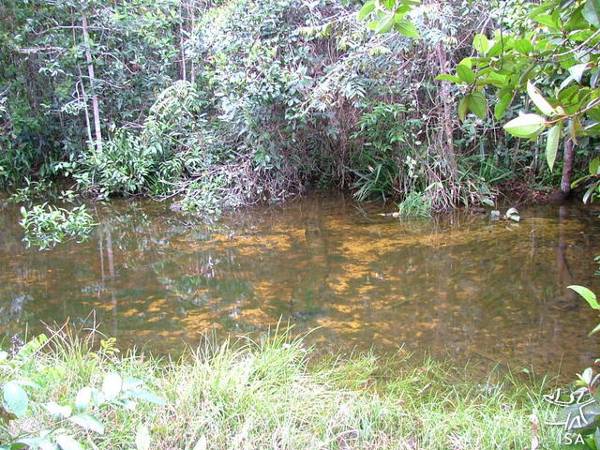
However more or less 250 years ago, the Carib groups who inhabited the Upper Culuene suddenly migrated to the region of Itavununu lake, today located within the borders of the Xingu Indigenous Park. Data obtained by Ellen Basso (1973) suggest that the exodus of the Upper Xingu Caribs from their ancestral lands was more than likely a consequence of slave trafficking. The Carib appear to have migrated from the upper Culuene to flee the slave hunters who were raiding indigenous villages during this period, capturing adult men for forced work in the mines, as well as women and children for domestic work. It was probably after an initial earlier phase of depopulation, the result of slave trafficking in the east of the Mato Grosso region, that the ancestral Carib groups of the Upper Xingu reunited to the south of Itavununu lake where they would reside for a considerable time.
It was from the shores of Itavununu, considered a sacred lake by all the contemporary Carib peoples in the region, that the ancestors of the Kalapalo, Kuikuro, Tsuva, Matipu, Nahukwá and Naruvotu eventually dispersed and formed distinct local groups. Each of these groups went to live in the region in which they are found today. The subgroups forming the present-day Kalapalo once again migrated to the headwaters of the Culuene and its affluents, the Tanguro and the Sete de Setembro, along with the Naruvotu. These two groups thus returned to the lands originally inhabited by the Upper Xingu Carib peoples.
While the Naruvotu chose the rich fishing region formed by the confluence of the Culuene and Sete de Setembro rivers and ventured upriver on the latter, exploring its lakes, the Kalapalo later went to ocucpy an area further to the east, along the right shore of the Culuene and the headwaters of the Tanguro river. At the end of the 19th century, therefore, the Naruvotu had already settled at the confluence of the Sete de Setembro and the Culuene, where they would build a large village called Pequizal on a stream flowing into the river’s left bank. This village had well over a hundred inhabitants during this period.
The events that followed in the 20th century were responsible for the transfer of this people to the Kuikuro, Matipu, Kalapalo and Tanguro villages located within the borders of the Xingu Indigenous Park.
Population
The Naruvotu currently live in the Kuikuro, Matipu, Kalapalo and Tanguro villages situated within the borders of the Xingu Indigenous Park. In 2003 the number of Naruvotu residing in these villages was 23, 6, 12 and 28 respectively. The total number of people living in the Upper Xingu was 69. At this time there were also 12 individuals living in Brasilia.
| Year | Inhabitants | Villages/Locality | Sources for calculation |
| 1850 | 200 | Angahukügü | Ahwalu, Camina |
| 1900 | 150/ 100 | Angaruhütü / Tihape | Ahwalu, Camina |
| 1920 | 80 | Angaruhütü | Noronha (1952) |
| 1931 | 70 (?) | Angaruhütü | Petrullo (1932) |
| 1946 (*) | 10 | Angaruhütü | Ahwalu, Atatiro |
| 1954 (*) | 9 | Kah nsu | Ahwalu, Atatiro |
| 1960 | 12 | Posto Jacaré | Fiorini, projeção |
| 1980 | 20/ 04 | Tanguro, Kuikuro / Brasília | Fiorini, projeção |
| 2003 | 69/ 12 | Tanguro, Kuikuro, Kalapalo, Matipu / Brasília | Fiorini, censo 2003 |
(*) Population after 1946 flu epidemic. (**) Population after 1954 measles epidemic. (?) Data uncertain.
History of contact
The first contacts between non-indigenous explorers and the Upper Xingu peoples were led by the German Karl von den Steinen in 1884 and 1887. Karl von den Steinen journeyed down the Curisevu river where he first encountered the Bakairi and later the Nahukwá. The Bakairi terms noted by von den Steinen for one of their neighbouring Upper Xingu groups– Anuakuru or Anahuku – may be related to the name A[n]garahâtâ (Angarühütü) used for the Naruvotu among the Kuikuro, or Anagafi ti (Angagüfütü), the name for the Naruvotu among the Kalapalo.
First contacts
In 1920, the Naruvotu were encountered close to the Culuene and Sete de Setembro rivers. At the time, Captain Ramiro Noronha, who organized an expedition ordered by the SPI (Indian Protection Service), came across two Naruvotu ports on the left bank of the Culuene. From the second port, Noronha walked inland to the Naruvotu village, located around five kilometres from the shore. According to him, the village was situated a day’s walk from the villages of the Kalapalo and the Nahukwá. Noronha also noted that the territory of the Naruvotu extended as far as the Couto de Magalhães river where the rapids of the upper Culuene ceased and the bays began to appear (1952: 39).
The village visited by Noronha was certainly Pequizal since the author remarks on the size of the pequi trees. There were four houses at the time and the community’s leader had just died. A Xinguano house can shelter around twenty people on average. Since Noronha does not cite any kind of calamity, even though the village leader had recently died, the population can be estimated to have contained at least eighty inhabitants. The next day Noronha reached the mouth of the Turuine, as it was called by the Carib, and re-baptized the river as the ‘Sete de Setembro’ to celebrate the day of his arrival.
In 1931 Vincent Petrullo visited the Xingu on a research expedition for the Museum of Philadelphia. Petrullo encountered the Naruvotu in precisely the same location where Noronha had visited them in 1920. At the time, the Indians were organizing various Kuarup festivals (a funerary ritual marking the end of mourning in Upper Xingu culture) in which the majority of the region’s other indigenous groups were also taking part.
The Naruvotu have always been a high-profile group within the Upper Xingu universe. They are systematically mentioned in the publications of all the early explorers in the region, so much so that the ethnologist Kurt Nimuendaju on his ethnohistorical map of Brazil, published in 1944, located them at the ‘portal’ to the Upper Xingu, close to the mouth of the Sete de Setembro river on the left shore of the Culuene.
From the start of the 20th century onwards, the indigenous peoples of the Upper Xingu began to be affected by diseases brought to the region via the Bakairi living in the Simões Lopes community on the Paranatinga river. This community had been created by the SPI with the intention of ‘attracting’ and pacifying all the region’s indigenous groups. But despite the efforts of the SPI and the missions established among the Bakairi of the Paranatinga at the time, just a small portion of this population left the Upper Xingu and even then against the will of many.
Expeditions, contacts and diseases
From the very first expeditions to the Upper Xingu, such as those of the explorers Karl von den Steinen in 1884 and 1887, Herrmann Meyer in 1896 and 1898, Max Schmidt in 1901 and 1926, Ramiro Noronha in 1920, Vincent Petrullo in 1931, and others that followed, like the Roncador-Xingu Expedition, the incoming groups of non-Indians brought infectious diseases in their wake that heavily affected the local populations.
The consequences of these contacts for the Naruvotu were extremely serious, particularly because of the proximity of their traditional land to the pioneer zone in the east of Mato Grosso, which was expanding, and their friendly relations with other Upper Xingu groups who had already had direct contacts with the surrounding society. Consequently long before the creation of the Xingu National Park, the Naruvotu were decimated by diseases until reduced to a small number of survivors, as occurred with various other Upper Xingu groups. Nonetheless the Naruvotu were so important in the Upper Xingu universe that they were systematically mentioned by all the indigenous groups consulted during the period of the Roncador-Xingu Expedition.
Along with the Kalapalo, the Naruvotu were the first Upper Xingu Indians to enter into direct contact with the Roncador-Xingu Expedition and with the famous indigenists Leonardo, Orlando and Cláudio Villas Bôas.
At the time of the beginning of the Roncador-Xingu Expedition, in 1946, the Naruvotu were still living in the large village of Pequizal, situated on a stream flowing into the left bank of the Culuene river. They frequented the navigable limits of the Sete de Setembro and Culuene rivers as far as the territories inhabited by the Xavante and other indigenous groups living further south. The expedition reached the Sete de Setembro river at the end of 1945. The expedition team set up an advanced base in the region, the Garapú Post, three kilometres from the left shore of the Sete de Setembro and 50 kilometres from its mouth on the Culuene.
After the initial encounter with the expedition team on the Sete de Setembro, the Naruvotu embarked on numerous visits to the encampment of the Roncador-Xingu Expedition on the Culuene river, located close to a Kalapalo village existing at the time, Kurumidjalo. The camp was quickly transformed into the Kuluene Post.
As a result of the innumerable visits and the increase in the number of people linked to the expedition at the Kuluene Post, a flu epidemic broke out shortly after the arrival of the expedition to the region, a month later in fact, in December 1946. According to reports from the expedition members themselves, this epidemic spread among various Upper Xingu groups.
Although the Villas Bôas brothers only reported mortality rates for the Kuikuro and Kalapalo, groups with larger populations, many indigenous accounts suggest that this epidemic spread as far as Pequizal village, forcing its inhabitants to abandon the site for the first time since its creation. Indeed when the researcher from the National Museum, Pedro Lima, undertook a journey to the Kalapalo village close to the Kuluene Post in 1948, he observed that there were some Naruvotu there, survivors of the flu epidemic that had swept through the region.
Without the support needed to remain in their village in the upper Culuene region, which they had left because of the flu outbreak, the Naruvotu remained among the Kalapalo, since the latter lived close to the base established by the Villas Bôas brothers on the Culuene river. However the Naruvotu made a new attempt to return to their ancestral lands at the end of the 1940s, even after the epidemic.
In 1947, the Roncador-Xingu Expedition established the Jacaré Post with the help of the Kamayurá and Trumai. The site chosen, close to Morená where the Xingu river is joined by two more of its feeder rivers, the Batovi and the Ronuro, and flows towards its middle course, is considered sacred by the Kamayurá and by the Upper Xingu Arawakan groups.
From 1950 onwards all the groups of the Upper Xingu, including those who had been ‘attracted’ to the Kuluene Post, were systematically persuaded to move to the Jacaré Post. Most of the Indians whose lands were located to the south, upriver of the Culuene and its headwaters, were transferred to this new site.
From the Jacaré Post a serious measles epidemic spread through the Upper Xingu region in 1954, resulting in the 114 deaths officially recorded by the SPI. Weakened, the Indians who did not die immediately were unable to hunt or plant, which compunded their physical vulnerability and led to more deaths, including from other diseases such as malaria and tuberculosis, rapidly introduced into the region with the arrival of the kagaiha (non-Indians). This epidemic seems to have been the final blow for the Naruvotu, taking the lives of people who had been lured to the Kuluene Post.
The few Naruvotu who had remained at Pequizal village survived. Even so, the people were profoundly affected by these deaths, since everything indicated that they would soon become extinct as a group. Following this final wave of fatalities, the Naruvotu decided to protect themselves, going to live at the Kuluene Post where they could obtain medical care. The history of the great Pequizal village would be forgotten for some years, then, allowing the sorrow caused by the deaths to pass. As well as the diseases that struck during this period, there were constant attacks by Indians from outside the Xinguano culture, principally the Ikpeng.
The groups like the Kalapalo and Kuikuro who took in the survivors also saw, at least in principle, the assimilation of Naruvotu members as an attempt to maintain the balance of the local population. For the Naruvotu survivors, most of whom were women and children, the only remaining option was to join neighbouring groups with whom many of their kin already lived. The lack of sufficient numbers of adult men among the Naruvotu (men who could assume a more public stance in the Upper Xingu societies and stimulate the reconstitution of their community, as well as the reappropriation of their lands) explains why the real situation of the Naruvotu did not surface earlier.
Expropriation of the traditional lands
At the start of the 1970s, the Naruvotu were persuaded to move to the Jacaré Post on the Xingu river, far away from their traditional lands. The first attempt to transfer them to the site had taken place after the deactivation of the Kuluene Post in the 1960s. However the Naruvotu still continued to occupy their ancestral lands on the headwaters of the Culuene and the Sete de Setembro. Even while they lived at the Jacaré Post, they would make this journey seasonally, especially in the months of October and November when the pequi fruit was ripe, and at various other times of the year. But the lands once occupied by the Naruvotu had already been sold by the State of Mato Grosso. While they were being ‘attracted’ to a region even further north of their traditional land, the latter was already being invaded by land squatters and the new landowners.
The consequences were extremely serious for the Naruvotu. While they were lured far away from their lands, other Upper Xingu groups who had also suffered huge population losses and were reduced to almost as few people as the Naruvotu, had their traditional lands recognized and to some extent recovered. The Indians of the Pequizal were forced to reside permanently with other Upper Xingu Carib groups, particularly with the Kalapalo, in order to guarantee their physical survival. They married them, but the whole time maintained a distinct identity, differently to what the kagaiha (non-Indians) believed with their ideas of ‘assimilation’ and ‘acculturation.’
Deterritorialization and ‘extinction’
Deterritorialized, the Naruvotu came to repeat for a while the idea of being ‘living remnants,’ a notion made official by the SPI and FUNAI. At the same time, unhappy with the series of invasions of their traditional lands, the Naruvotu continued to explore and occupy them frequently, as they still do, but always having to allow them to return to the hands of those who had expropriated them when they left.
Since the first contacts undertaken in the Upper Xingu region by explorers, the SPI ‘attraction fronts’ and the famous Roncador-Xingu Expedition, historical, geographic and political circumstances had led to the failure to recognize the Naruvotu as an autonomous group. Even within the Upper Xingu, many Indians came to accept the idea of the extinction of certain groups such as the Naruvotu, an idea divulged by the indigenists who ended up maintaining permanent relations with the region’s communities.
In 1999, the new kagaiha‘ owners’ of the area traditionally occupied by the Naruvotu decided to end for once and all the attempts to reappropriate the land and the constant visits of the Indians. These landowners feared that the area would become an Indigenous Land like the Xingu Park and therefore decided to fell the pequi woods in order to eliminate the vestiges of the former villages.
The reaction of the Naruvotu to this attempt to eradicate the evidence of their presence in the region was to organize expeditions to free their traditional lands from occupation. The last two expeditions of this kind were conducted in 1999 and 2003. In the first expedition, employees of the farmers who were cutting down the pequi trees were expelled, while in the second the Indians managed to prevent the deforestation of areas further to the west, apparently cleared for soybean planting. This clearance had also encroached into the permanent preservation area formed by the Xingu Indigenous Park and was thus illegal. Moreover there had been a full-scale invasion of this indigenous land, explained by the farmers as a ‘cartographic mistake.’ Another area had been felled in the region of the Naruvotu land in June 1994 and was again retaken by the Indians.
In 2006, the Pequizal do Naruvotu Indigenous Land, located in the municipalities of Canarana and Gaúcha do Norte, in Mato Grosso state, was identified and approved by FUNAI.
Naming system
Among the Carib of the Upper Xingu each individual possesses at least two names, one inherited from the paternal grandfather or grandmother and the other from the maternal grandfather or grandmother. Hence each father generally calls his son or daughter by one of the names of his parents, while each mother equally calls her children by the names of her own parents. Reflecting the social rules of the Xinguano Caribs in general, a prohibition exists on pronouncing the names of people with whom one establishes kinship ties through marriage, meaning that sons-in-law and daughters-in-law cannot pronounce the names of their parents-in-law. Parents cannot, therefore, use the alternative names for their children that correspond to the names of the parents of the people with whom they are married. There is no agnatic rule (giving preference to paternal descent) in naming: an individual’s identification is determined through gender.
In the Naruvotu naming system, if an individual is male and one of his grandfathers was Naruvotu, he will also be Naruvotu. Likewise if a woman has (or had) at least one Naruvotu grandmother, she too will be Naruvotu. Mixed marriages, therefore, are not enough to eradicate identity, whether Naruvotu or any other.
Productive activities
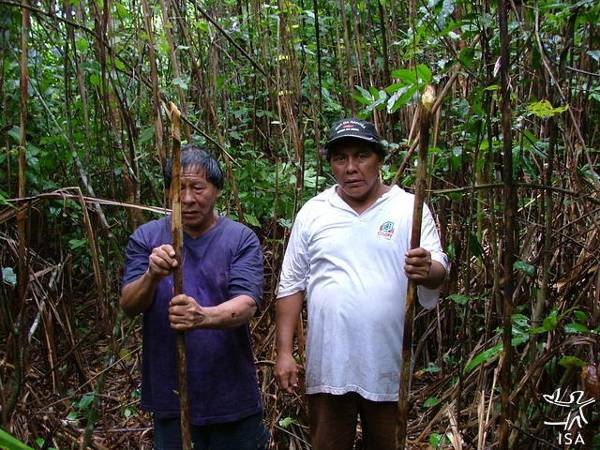
The Naruvotu undertake regular journeys to make seasonal use of their ancestral lands in the most effective form possible, organizing fishing expeditions to the bays between the Sete de Setembro and Culuene rivers, including during those periods when the lake outlets dry up and imprison the fish, as well as various other times of the year.
They gather pequi in November during the rains and continue to collect water snails close to the mouth of the above mentioned stream, trekking into the forests close to the Xingu Indigenous Park in the regions to the west and northwest of the pequi woods to hunt monkeys and other animals.
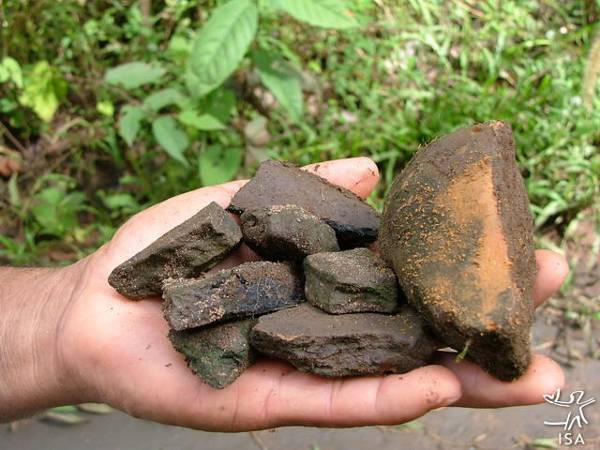
Other activities pursued in the Naruvotu region include collecting arrow shafts. The area to the north of Pequizal village served for planting manioc since the soil in this area, a kind of terra preta, is very fertile.
One of the main productive activities of the Naruvotu is manufacturing shell necklaces. The snails used to obtain these shells are found only in their ancestral lands.
The majority of the Upper Xingu groups obtain the shells from the Xavante, in whose lands these snails are abundant. This was not possible, though, before the arrival of the non-Indians since the Xavante were traditionally enemies of these groups. The Naruvotu therefore possessed one of the most sought-after raw materials of the Upper Xingu.
The importance of the pequi trees and the economic monopoly held over the snail shells made the Naruvotu an essential local group in the Upper Xingu regional economy. The pequi tree also became one of the commercial ‘brand’ items of the Naruvotu. Both in the people’s mythology and in their oral history, the appearance of the pequi is linked to the creative and reproductive power of women. Indeed the intermarriages between Upper Xingu groups are expressed ritually through the pequi, a symbol of fertility in the regional culture. Naruvotu women conceived and stimulated the various returns of their local group to the pequi woods, since they are always the ones who remind the men of the need to gather pequi fruit.
Cultural aspects
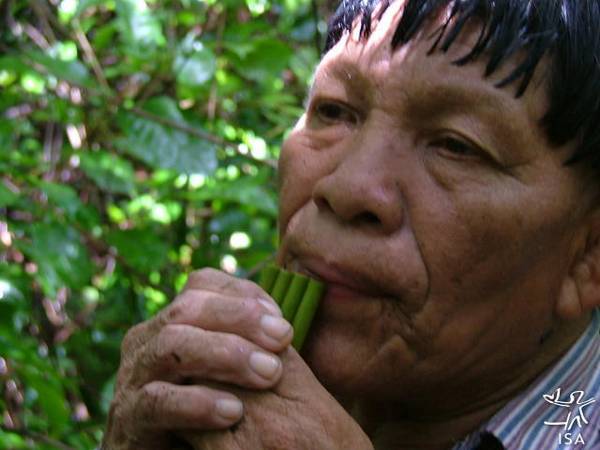
The Naruvotu can be considered the Upper Xingu Carib group located the furthest southeast of the ‘uluri cultural area,’ as defined by Galvão (1960). The uluri is a genital adornment used by women as a kind of ‘modesty bikini (or dental floss).’ Although it does not fully cover the female genitals, when the women use the uluri, they feel ‘dressed.’ Nowadays, however, the uluri is not much used by Upper Xingu women due to the influence of the parameters of modesty of surrounding Brazilian society.
Naruvotu men were seen to be among the best huka huka wrestlers in the Upper Xingu. Some of the names of past Naruvotu champions are recalled even today. They are also skilled explorers of the bays
and lakes found along the estuaries of the Sete de Setembro river (called Turuwíne) and the upper Culuene. The Naruvotu, along with the other Carib peoples of the Upper Xingu, are the ‘owners of the snail,’ since they have the monopoly on this Upper Xingu cultural items, and they are also owners of one of the region’s largest pequi tree stands (pequizais).
The Naruvotu stream is the only place in the Upper Xingu where areas exist with dense populations of the two types of water snail used to make the shell necklaces which are the identity mark of the region’s culture. “There are basically two types of snail: the iñô and the oink, smaller than the former, more highly prized and worth ‘more than paper.’ The snails live in places like marshes, tree stumps and on the underside of leaves, and are highly valued. Their shells are used to make two types of necklaces: the uruka, made from shells cut into small round strips, and the divériku, made from larger, squarer pieces with fewer shells” (Estevão Rafael Fernandes 1999:14).
As owners of this raw material essential to annual rituals like the Egitsu (''Kuarup''), the Tolo and the Yamurikumã (the pequi ritual), the monopoly held by the Naruvotu over the snail shells is just as important as the monopolies held by other Upper Xingu groups over equally coveted items: Waujá clay pots, Mehinaku hyacinth ‘salt’, Kamayurá bows, and so on. These monopolies are no longer as pronounced today because of the influences of the craftwork trade with non-Indians, but lasted until the 1990s.
Sources of information
- BASSO, Ellen. The Kalapalo Indians of Central Brazil. Holt, Rinehart & Winston Inc., New York, 1973.
- --------. “O que podemos aprender do discurso Kalapalo sobre a ‘História Kalapalo’”? In: Os Povos do Alto Xingu: História e Cultura. Franchetto, B. & Heckenberger, M. (Orgs.). Editora Universidade Federal do Rio de Janeiro (UFRJ), Rio de Janeiro, 2000.
- DAL POZ, João. Laudo antropológico: Histórico de ocupação do Alto Xingu. Manuscrito, CGID/FUNAI, Brasília, 2003.
- FRANCHETTO, Bruna. Laudo antropológico: a ocupação indígena da região dos formadores e do alto curso do rio Xingu. Manuscrito, Museu Nacional/ UFRJ, Rio de Janeiro, 1996 [1986].
- Franchetto, B. & Heckenberger, M. (Orgs.).Os Povos do Alto Xingu: História e Cultura. Editora da UFRJ, Rio de Janeiro, 2000.
- GALVÃO, Eduardo. “Áreas culturais do Brasil: 1900-1959”. In: Boletim do Museu Emílio Goeldi, Belém, n. 8, 1960.
- Heckenberger, Michael. “Epidemias, índios bravos e brancos: contato cultural e etnogênese do Alto Xingu” & “Estrutura, história e transformação: a cultura xinguana no longe durée, 1000-2000 d.C.” In: Os Povos do Alto Xingu: História e Cultura. Franchetto, B. & Heckenberger, M. (Orgs.). Editora da UFRJ, Rio de Janeiro, 2000.
- LIMA, Pedro. “Distribuição dos grupos indígenas no Alto Xingu”. Congresso Internacional dos Americanistas. São Paulo, 1955, EM Anais, pp. 159-170.
- MENEZES, Maria Lúcia. Parque do Xingu: a construção de um território estatal. Universidade Federal do Rio de Janeiro, Rio de Janeiro, 1989. (Dissertação de mestrado)
- MOTA, J. Leão da. A epidemia de sarampo no Xingu. Serviço de Proteção aos Índios. Relatório, 1955.
- NORONHA, Ramiro. “Exploração e levantamento do rio Culuene, principal formador do rio Xingu”. In: Publicação da Comissão Rondon, n. 75, Depto. de Imprensa Nacional, Rio de Janeiro, 1952 [1920].
- PETRULLO, Vincent. “Primitive peoples of Mato Grosso, Brazil”. In: Museum Journal, Philadelphia, 1932, v. 23, n. 2, pp. 83-173.
- Villas Boas, Orlando. Xingu: Os índios, seus mitos. Editora Zahar: Rio de Janeiro, 1970.
- Villas Boas, Orlando & Cláudio. A marcha para o Oeste. Editora Globo: Rio de Janeiro, 1994.
- Von den Steinen, Karl. “Entre os Aborígines do Brasil Central”. In: Revista do Arquivo Municipal, São Paulo, 1940, pp. 34-48.